The necklace

Chapter 1


Comprehension Questions

1. What kind of family was Mathilde born into?
Mathilde was born into a poor family of clerks.
2. What did Mathilde often dream about?
She often dreamed of a life of luxury, beautiful dresses, grand parties, golden decorations, and being admired by everyone.
3. Why did visiting Madame Forestier make Mathilde unhappy?
Seeing her friend’s rich clothes and lovely home made Mathilde feel poor, small, and deeply unsatisfied with her own life.
4. Why was Monsieur Loisel excited about the invitation?
He thought his wife would be happy to go, as it was a rare chance and a very exclusive event that everyone wanted to attend.
5. What was Monsieur Loisel’s job?
He worked as a simple clerk in the Ministry of Education.
6. How did Mathilde feel about her apartment?
She felt sad and angry about her poor home, its old furniture, and faded curtains.
7. What special thing did Monsieur Loisel bring home?
He brought home a large envelope containing an invitation to a grand party at the palace of the Ministry.
8. What was Mathilde’s first concern after reading the invitation?
Her first concern was that she had nothing suitable to wear to such a fancy event.

Grammar Exercises

1. Mathilde B) was born into a poor family.
2. Monsieur Loisel C) worked as a clerk in the Ministry.
3. The invitation B) was brought by her husband.
4. Her husband C) was excited about the invitation.
5. She A) dreamed of a luxurious life every day.
6. Mathilde A) wasn’t satisfied with her life.
7. Mathilde C) visits her rich friend sometimes.
8. What B) was Mathilde worried about?


Chapter 2


Comprehension Questions

1. Why was Monsieur Loisel shocked?
He was shocked by Mathilde’s angry and sad reaction to the invitation instead of being happy.
2. How much money did Mathilde ask for?
She asked for 400 francs to buy a suitable dress.
3. Why did he agree to give Mathilde the money?
He agreed because he wanted Mathilde to be happy, even though it was the exact amount he had saved to buy a hunting gun.
4. What idea did Monsieur Loisel suggest?
He suggested that Mathilde visit her rich friend, Madame Forestier, and ask to borrow some jewelry.
5. Why did Mathilde begin to cry?
She began to cry because she had no dress for a party like this and felt she couldn’t go.
6. What had Monsieur Loisel planned to buy with his savings?
He had planned to buy a gun for a summer hunting trip with his friends.
7. What problem did Mathilde have after buying the dress?
She was annoyed and sad because she had no jewelry, not even one piece, to wear with her new dress.
8. Which piece of jewelry did Mathilde choose?
She chose a stunning diamond necklace in a black satin box.

Grammar Exercises

• 1. Mathilde B) cried when she thought about the party.
• 2. Monsieur Loisel C) gave her 400 francs.
• 3. The money A) was saved for a hunting trip.
• 4. Mathilde B) bought a beautiful dress.
• 5. Madame Forestier C) opened her jewelry box.
• 6. Mathilde C) tried on several pieces of jewelry.
• 7. Her eyes B) sparkled with excitement.
• 8. She C) chose the diamond necklace.


Chapter 3


Comprehension Questions

1. How did Mathilde look on the night of the party?
She was more beautiful than ever, elegant, graceful, charming, and smiling with joy.
2. Why did many people pay attention to Mathilde?
Because she was the most elegant woman in the room, making everyone turn to look at her, whisper, and admire her charm.
3. Where was Monsieur Loisel while his wife was dancing?
He sat in a small room next to the ballroom, waiting patiently since midnight along with other husbands.
4. What did Mathilde and her husband do when they could not find a taxi?
They walked along the river, shivering from the cold, and searched for a taxi, calling out to drivers until they finally found an old cab.
5. What happened when Mathilde entered the grand hall?
Everyone turned to look at her, people whispered and stared, and men asked to be introduced to her to dance.
6. How did Mathilde feel during the party?
She felt like a queen, completely happy, and forgot her real life as she lived her dream.
7. Why did Mathilde feel ashamed after the party?
She felt ashamed because her husband put an old, simple coat on her shoulders, while other women wore expensive fur wraps.
8. What terrible discovery did Mathilde make when she arrived home?
She discovered that the borrowed diamond necklace was gone from her neck.

Grammar Exercises

• 1. Everyone B) looked at Mathilde when she entered the hall.
• 2. Many men A) wanted to dance with her.
• 3. They B) searched for a taxi after the party.
• 4. Monsieur Loisel A) walked through the streets all night.
• 5. She B) felt like a queen that night.
• 6. Monsieur Loisel A) waited patiently in another room.
• 7. The necklace B) became missing.
• 8. The necklace B) was nowhere to be found.


Chapter 4


Comprehension Questions

1. What decision did Monsieur Loisel make after the necklace was lost?
He decided that they must replace the lost necklace.
2. Where did the Loisels finally find a necklace that looked the same?
They found it at a jewelry shop near the Palais Royal.
3. How did Monsieur Loisel get enough money to buy the necklace?
He used 18,000 francs from his father’s savings and borrowed the rest from friends, strangers, and loan sharks, signing papers and agreeing to high interest.
4. How did the Loisels’ lives change after they bought the replacement necklace?
They dismissed their servant, moved into a small attic apartment, and spent ten years working day and night to pay off their massive debts.
5. Why did the jeweler say he could not help them find the necklace?
The jeweler explained that he didn’t sell the original necklace itself; he had only provided the box.
6. How much did the replacement necklace cost?
It cost them thirty-six thousand (36,000) francs in full.
7. Why was Mathilde filled with fear and guilt?
She was terrified that Madame Forestier would open the box, discover the switch, and think she was a thief.
8. How long did it take them to pay back all their debts?
It took them ten long years.

Grammar Exercises

• 1. The Loisels B) decided to replace the necklace.
• 2. The necklace A) cost thirty-six thousand francs.
• 3. Many loan papers B) were signed by him.
• 4. Her husband A) worked day and night.
• 5. They B) found a similar necklace.
• 6. Monsieur Loisel B) borrowed money from many people.
• 7. Mathilde C) did all the housework herself.
• 8. They A) paid off their debts after ten years.


Chapter 5


Comprehension Questions

1. How had Mathilde’s life changed after ten years of hard work?
She became poor, old, and tired, with rough red hands and tangled hair, no longer caring about fashion or luxury.
2. Why did Madame Forestier not recognize Mathilde at first?
Because Mathilde had changed so much from the hard life and labor that she looked like a completely different, poor woman.
3. What did Mathilde say happened to the borrowed necklace?
She confessed that she had lost it and bought an identical one to replace it.
4. What surprising truth did Madame Forestier reveal?
She revealed that her original necklace was a fake made of glass and was worth no more than 500 francs.
5. Where did Mathilde meet Madame Forestier again?
She met her on the Champs-Élysées, a beautiful street in Paris, during a Sunday walk.
6. What did Mathilde decide to tell Madame Forestier?
She decided it was finally time to tell her the whole truth about losing the necklace and replacing it.
7. How long had the Loisels worked to pay for the replacement necklace?
They worked for ten long years.
8. How much was the original necklace actually worth?
It was worth no more than 500 francs.

Grammar Exercises

• 1. Ten years A) has passed.
• 2. She B) met Madame Forestier on the street.
• 3. Mathilde B) told the truth about the necklace.
• 4. It B) was made of glass.
• 5. Mathilde A) looked much older.
• 6. Madame Forestier A) didn’t recognize Mathilde at first.
• 7. The necklace B) was not real.
• 8. Mathilde B) was shocked by the truth.
Multiple test

Part 1. Four Present Tenses — 15 sentences

Task: Put the verbs in brackets into the correct present tense: Present Simple, Present Continuous, Present Perfect, or Present Perfect Continuous.

1. My sister usually walks to school, but today she is taking the bus.

2. I have known David for five years.

3. Be quiet! The baby is sleeping.

4. How long have you been learning English?

5. Tom has not finished his homework yet.

6. Water boils at 100°C.

7. We have been waiting for the teacher for twenty minutes, and she still hasn’t arrived.

8. Have you ever visited a foreign country?

9. Why are you wearing a coat indoors? Is it cold?

10. My father has been working in this company since 2018.

11. She rarely watches television because she prefers reading.

12. Look! Someone is trying to open the window.

13. I am tired because I have been cleaning the house all morning.

14. He has already sent the email, so you don’t need to remind him.

15. How often do your classmates participate in school competitions?


Part 2. Four Past Tenses — 15 sentences

Put the verbs in brackets into the correct past tense: Past Simple, Past Continuous, Past Perfect, or Past Perfect Continuous.

1. While I was walking home, I met an old friend.

2. By the time we arrived at the station, the train had already left.

3. She had been studying for three hours before she finally took a break.

4. They were watching a film when the electricity went off.

5. I did not see him at the party last Saturday.

6. After Mark had finished his project, he sent it to his teacher.

7. It had been raining all night, so the streets were wet in the morning.

8. What were you doing at 8 p.m. yesterday?

9. When we got to the cinema, the film had already started.

10. She was exhausted because she had been working all day.

11. My parents bought this house in 2015.

12. While the teacher was explaining the task, some students were talking.

13. He had never flown before he travelled to Italy last year.

14. The children had been playing outside for an hour when it started to snow.

15. I lost my keys yesterday, but I found them this morning.

Part 3. Mixed Present and Past Tenses — 30 multiple-choice questions

Task: Choose the correct answer: A, B, C, or D. Multiple-choice test

1. My brother usually _____ coffee in the morning.
A. is drinking
B. DRINKS
C. has drunk
D. drank

2. Look! The children _____ in the garden.
A. play
B. played
C. ARE PLAYING
D. have played

3. I _____ this book twice already.
A. read
B. am reading
C. HAVE READ
D. had read

4. She _____ English for three years and is making good progress.
A. studies
B. HAS BEEN STUDYING
C. studied
D. was studying

5. We _____ to the museum last Friday.
A. have gone
B. go
C. were going
D. WENT

6. While I _____ dinner, my phone rang.
A. cooked
B. WAS COOKING
C. have cooked
D. had cooked

7. By the time we arrived, the meeting _____.
A. starts
B. has started
C. HAD STARTED
D. was starting

8. He was tired because he _____ for hours.
A. HAD BEEN DRIVING
B. drives
C. has driven
D. is driving

9. How long _____ you _____ your best friend?
A. do / know
B. are / knowing
C. HAVE / KNOWN
D. did / knew

10. They _____ TV when the lights suddenly went out.
A. watched
B. have watched
C. had watched
D. WERE WATCHING

11. My mother _____ in a hospital. She is a doctor.
A. WORKS
B. is working
C. worked
D. has worked yesterday

12. I _____ my homework yet.
A. didn’t finish
B. HAVEN’T FINISHED
C. don’t finish
D. hadn’t finished

13. When I arrived at the airport, my friends _____ for me for an hour.
A. waited
B. have waited
C. HAD BEEN WAITING
D. are waiting

14. He _____ his wallet yesterday, but someone returned it.
A. has lost
B. loses
C. had lost
D. LOST

15. Why _____ you _____? Is something wrong?
A. do / cry
B. ARE / CRYING
C. have / cried
D. did / cried

16. She _____ in Yerevan since 2020.
A. lives
B. lived
C. HAS LIVED
D. is living yesterday

17. When we entered the classroom, the lesson _____.
A. already began
B. has already begun
C. was already beginning
D. HAD ALREADY BEGUN

18. I _____ my grandparents every Sunday when I was a child.
A. VISITED
B. have visited
C. am visiting
D. had visited

19. Listen! Someone _____ at the door.
A. knocked
B. has knocked yesterday
C. IS KNOCKING
D. knocks yesterday

20. He _____ for the exam all week, so he feels confident.
A. studied
B. HAS BEEN STUDYING
C. had studied last week
D. studies yesterday

21. They _____ the house before the guests arrived.
A. clean
B. have cleaned
C. were cleaning yesterday
D. HAD CLEANED

22. I _____ him at the conference two days ago.
A. met
B. have met
C. had met yesterday
D. MEET

23. She _____ lunch when her colleague called.
A. has eaten
B. eats
C. WAS EATING
D. had eaten tomorrow

24. We _____ each other since primary school.
A. know
B. HAVE KNOWN
C. knew tomorrow
D. are knowing

25. It _____ heavily when we left the house yesterday morning.
A. rains
B. has rained
C. had rained tomorrow
D. WAS RAINING

26. How many emails _____ you _____ today?
A. HAVE / RECEIVED
B. did / received
C. are / receive
D. had / receive

27. By 10 p.m. last night, she _____ the entire report.
A. writes
B. has written
C. HAD WRITTEN
D. is writing

28. The students _____ on this project since Monday.
A. work
B. HAS BEEN WORKING
C. worked yesterday
D. are worked

29. He _____ breakfast before he went to school.
A. has eaten
B. eats
C. was eating
D. HAD EATEN

30. I can’t come outside because I _____ my room.
A. AM CLEANING
B. cleaned yesterday
C. had cleaned last week
D. clean yesterday

Assignments for 12.10.26

Question 1: Do you cope well under pressure?

Yes, I cope well under pressure. When I feel stressed, I do not panic. Instead, I organize my time, make a clear plan, and focus on one task at a time. I believe this mindset will help me in the future when I work with patients in a dental clinic.

Question 2: What skills do you need to be successful in your ideal job?

My ideal job is to become a dantist. To be successful in this profession, I need to develop several important skills:

High precision and focus: Dental work requires great attention to detail and a very steady hand.


Strong biology and chemistry knowledge: I need to study hard now in school to understand how the human body and different medical materials work.

Patience and stress resistance: Working with different people all day can be tiring, so it is important to stay patient and professional.

Assignments for 09.10.26

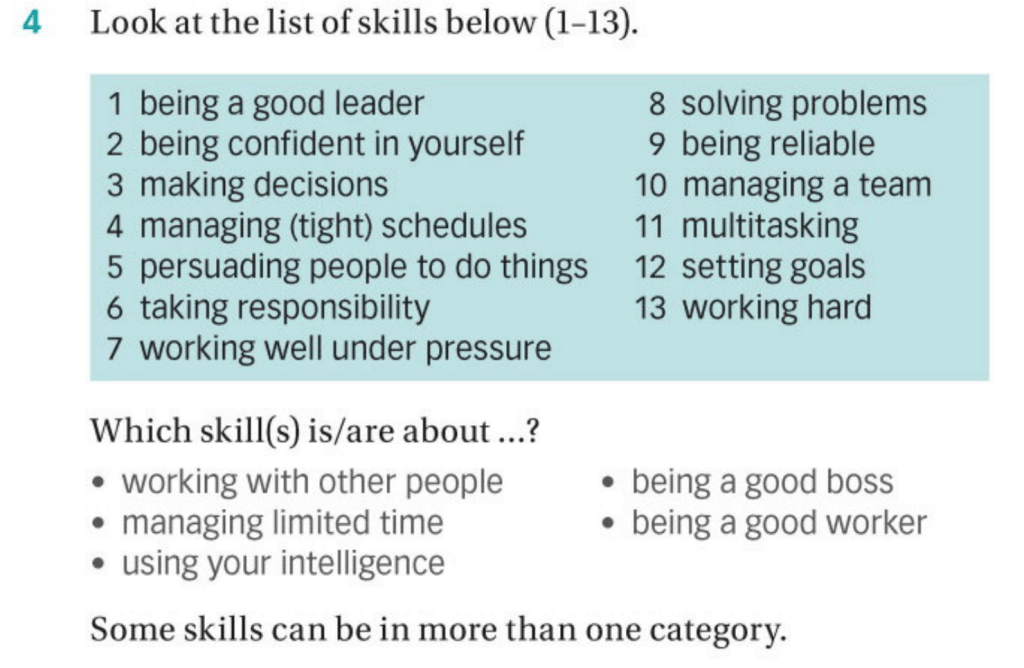
working with other people


1 being a good leader

5 persuading people to do things

10 managing a team


managing limited time


4 managing (tight) schedules

7 working well under pressure

11 multitasking


using your intelligence


3 making decisions

8 solving problems

12 setting goals


being a good boss


1 being a good leader

3 making decisions

5 persuading people to do things

6 taking responsibility

10 managing a team

12 setting goals


being a good worker


2 being confident in yourself

6 taking responsibility

7 working well under pressure

9 being reliable

11 multitasking

13 working hard

Assignments for 08.10.26

Exercise A

  1. My German teacher says I’ve made a lot of progress this term.
  2. What time are you taking the French exam tomorrow?
  3. I’m not in favour of giving students lots of homework each night.
  4. Being able to drive a car is a very useful skill.
  5. Have we got to learn all these irregular verbs by heart?
  6. Some languages, like Russian for instance, can’t have words for ‘a’, ‘an’ and ‘the’.
  7. I got a very good mark in my geography test.
  8. Many people hate learning phrasal verbs, but in fact they’re not that difficult.

Exercise B

  1. Simon rubbed out the wrong answer and wrote the right one.
  2. Why did you rip up that piece of paper?
  3. If you make a mistake, just cross it out.
  4. You should look up words you don’t know in a dictionary.
  5. Carol, will you read out your poem to the class, please?
  6. Our teacher pointed out that we only had five minutes left.
  7. Have you all written down what the homework is?

Exercise C

  1. What’s the name of Dave’s driving instructor?
  2. Dictionaries and encyclopedias are examples of reference books.
  3. I’ve only been learning Arabic for a few months, so I’m still a beginner.
  4. In maths, you have to learn to do addition, subtraction, multiplication and division.
  5. Three of your answers were incorrect, so you got 17 out of 20.
  6. Are you really going to take part in the singing competition? I admire your bravery.
  7. I think every child should get a good education.
  8. There’s a memorial to Albert Einstein in the town square.
  9. I want complete silence, so no talking at all!
  10. This maths problem is too difficult for you, so I’ll simplify it a little.

Exercise D

  1. It’s the first time I’ve got all the answers right in a test!
  2. The exam had already started when Jimmy finally found the right room.
  3. You’d done that crossword for over an hour and you still haven’t finished it!
  4. When they let us go in, we had been standing outside the exam room for over half an hour.
  5. Clare hasn’t finished her homework just.
  6. Have you ever been on a school trip?
  7. Lizzie has been having dance classes since she was four years old.
  8. Had you been learning French several years before you took your first exam when?

Exercise E

Cheating

You’re doing a history test. Your friend, who’s sitting next to you, really wants to succeed in the test. There’s a question about the First World War, which you’ve been learning for recently. You know a lot at it, but your friend isn’t really capable of answering the question properly. Your friend whispers ‘Help me!’ to you. What should you do? Should you help your friend with the question, or just continue on your own test?

Every student has to cope with this difficult situation at some point. What’s your opinion about cheating? Should you help your friend cheat in the test or not?

Exercise F

  1. Do you think you get a good education at your school?
  2. I’m not an expert. I’m only a beginner.
  3. The police are going to give Tracy an award for bravery.
  4. I’m writing in reference to your advertisement for a guitar teacher.
  5. I want silence at all times during the exam.
  6. Rupert is an instructor at a local extreme sports centre.
  7. I’m afraid that answer is incorrect, so you haven’t won today’s top prize.
  8. You don’t understand division? Look! Twelve divided by four is three. It’s easy!
  9. This is really difficult to understand. Why don’t we simplify it a little?
  10. Actors have to memorise a lot of words when they are in a play.

Exercise G

  1. You didn’t cheat in the exam, did you?
  2. We’re learning about dinosaurs at the moment at school.
  3. What’s your opinion on children going to school at a very young age?
  4. I think you’ve confused astronomy with astrology – they’re not the same!
  5. I hope Mr Aziz doesn’t ask me a question for the book because I haven’t read it.
  6. I can’t cope with all this homework I’ve got to do!

Exercise H

  1. Sasha is really talented at tango dancing.
  2. Our teacher wasn’t feeling well but she continued learning the lesson.
  3. I know nothing about designing clothes at all.
  4. I’ve been helping Dan with his homework because he couldn’t do it on his own.
  5. No one is capable of learning all that in one day!
  6. I really hope you succeed in finding a solution to the problem.

Review

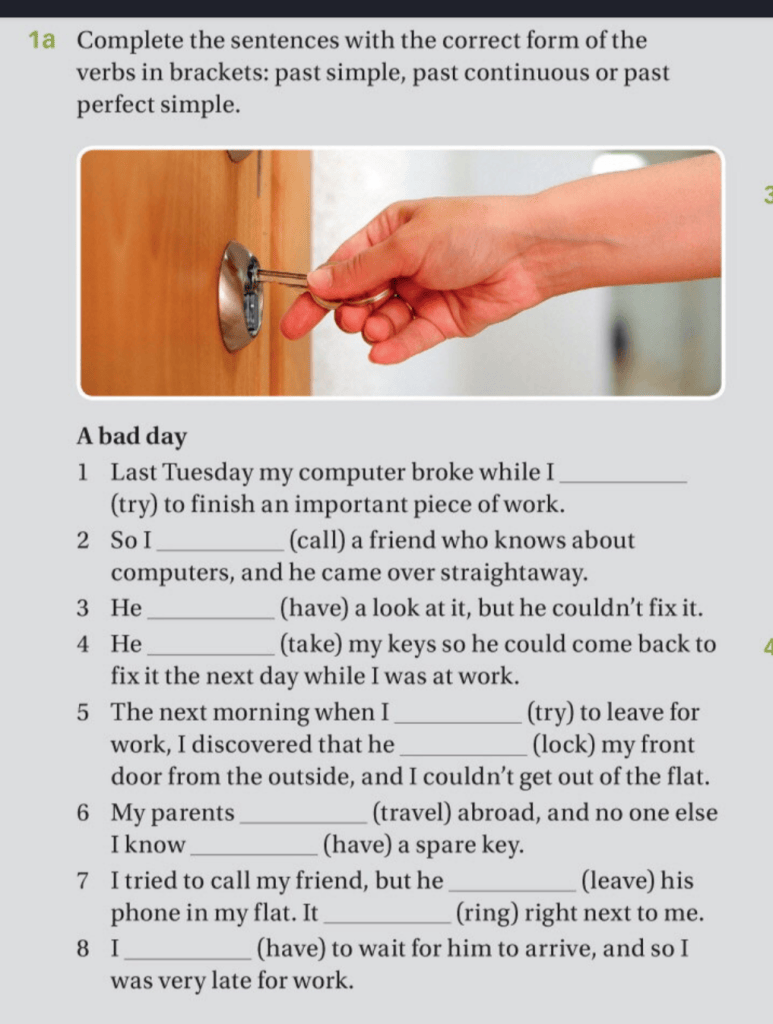
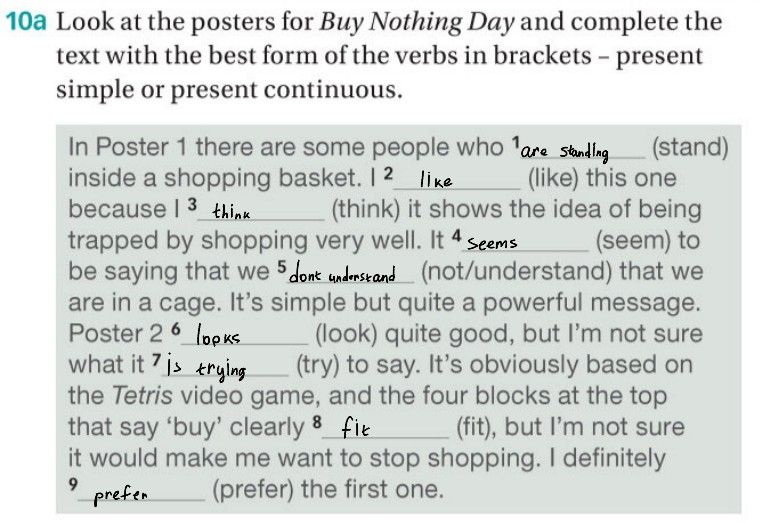
1. Last Tuesday my computer broke while I was trying (try) to finish an important piece of work.
2. So I called (call) a friend who knows about computers, and he came over straightaway.
3. He had (have) a look at it, but he couldn’t fix it.
4. He took (take) my keys so he could come back to fix it the next day while I was at work.
5. The next morning when I was trying (try) to leave for work, I discovered that he had locked (lock) my front door from the outside, and I couldn’t get out of the flat.
6. My parents were travelling (travel) abroad, and no one else I know had (have) a spare key.
7. I tried to call my friend, but he had left (leave) his phone in my flat. It was ringing (ring) right next to me.
8. I had (have) to wait for him to arrive, and so I was very late for work.

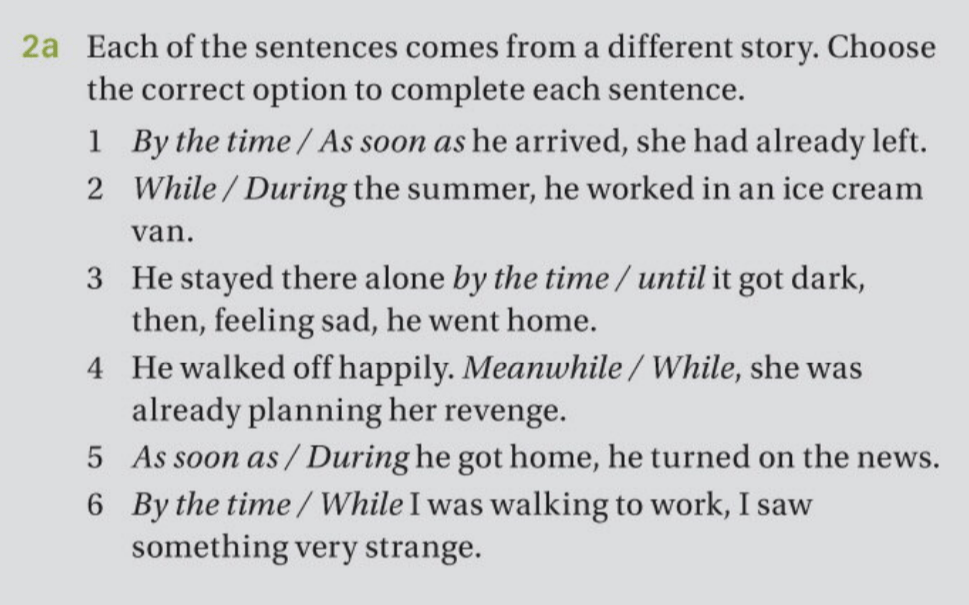
1.By the time

2.During

3.Until

4.Meanwhile

5.As soon as

6.While

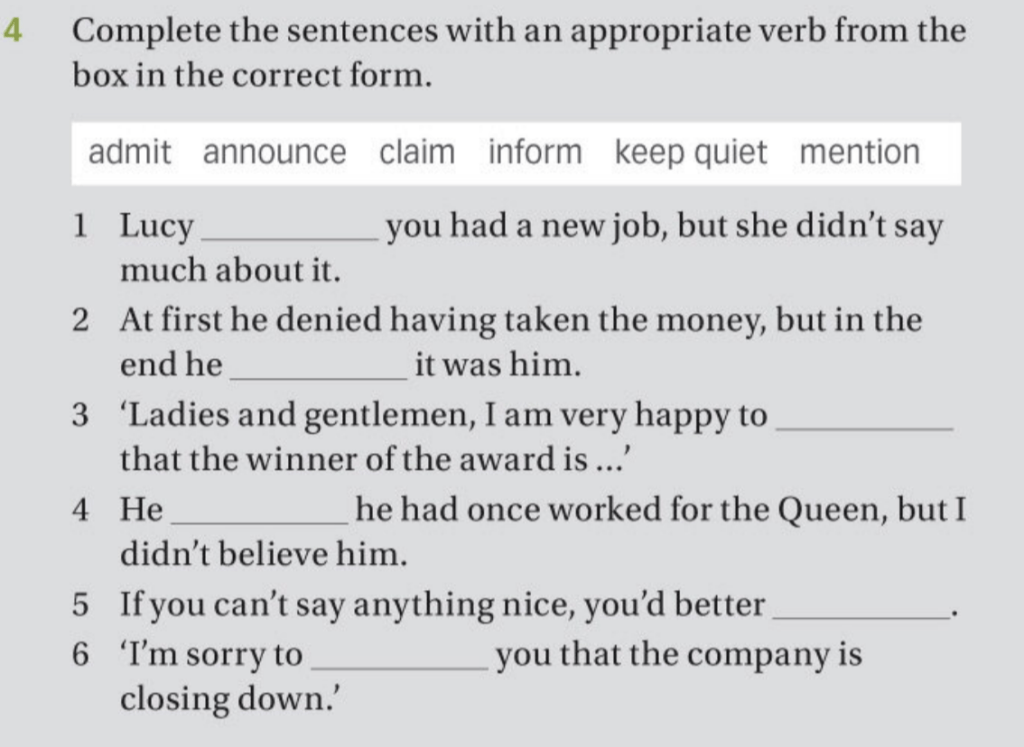
1. Lucy mentioned you had a new job, but she didn’t say much about it.
2. At first he denied having taken the money, but in the end he admitted it was him.
3. ‘Ladies and gentlemen, I am very happy to announce that the winner of the award is…’
4. He claimed he had once worked for the Queen, but I didn’t believe him.
5. If you can’t say anything nice, you’d better keep quiet.
6. I’m sorry to inform you that the company is closing down.’

Can people truly change

«A leopard cannot change its spots.» We have all heard this saying. When we see people make the same mistakes, it is easy to think that people never change. But is this true? Can people truly change their behavior and personality? The answer is yes, but it is very hard work.
Science proves that our brains can change.

Scientists call this neuroplasticity. Our brains are not like hard stone; they are like soft clay. When we learn something new or break a bad habit, we physically change our brains. In fact, studies show that our personalities change the most between the ages of 20 and 40.
If change is possible, why does it seem so rare? The problem is that humans love habits. We do about 43% of our daily actions automatically. To change, we must stop living on autopilot. A person cannot change just because you want them to. They must want it themselves. They need to look at their flaws honestly and decide to do the hard work.

In conclusion, change does not happen overnight. It is a slow process. We are not finished products; we are all works in progress. If you want to change, you just need to take one small step today. Thank you.

Seven Good Stories

1.Match the questions to the answers.
1 Does the story have an exciting plot?
Yes, there are many things in the story because of this, the plot is exciting.
2 Does the story make you laugh?
No, the story is more about adventure and love and not about comedy.
3 Does the story make you cry?
To be honest, no, but the story is sad.
4 Is it a frightening story?
There are moments where the plot should be scary, such as Dracula. But this is too childish a story because of this, it’s not scary.
5 Are there any surprising moments in the story?
The most important surprise is that there are seven stories in one story.
6 Do you like the ending?
a Yes, it’s a really funny comedy.
b Yes, because the characters all live happily ever after!
c Yes, it’s a tragedy. The couple die in each other’s arms.
d Yes, one man goes on an adventure. He meets many
people, and some amazing things happen to them.

e Yes, it’s a shock when we discover that the hero of the
story is actually the little boy who lives next door.
f Yes, it is. You believe the villain is going to kill everyone.

Cinderella

Cinderella is a classic folktale that has been adapted and retold in various cultures and forms over the years.

Jaws

The film is based on Peter Benchley’s novel of the same name. “Jaws” is often considered the first major summer blockbuster and is known for its suspenseful storytelling and iconic musical score composed by John Williams.

Macbeth

“Macbeth” is a tragedy written by William Shakespeare, believed to have been first performed in 1606. It is one of Shakespeare’s shortest plays but is highly regarded for its powerful and intense depiction of ambition, power, and the consequences of unchecked desire.

1 Everyone / Certain people believe that stories are all
based on seven types of plot. In Cinderella, Aladdin and
Harry Potter, the main characters all 2 win and lose / lose
something
 before learning a lesson about life. Villains
3 always / normally die at the end of tragedies. In sagas,
the main characters go on a great journey. At the end
of these stories, they usually 4 reach / fail to reach their
destination. In a ‘voyage and return’ story, the main
character will usually return home with 5 nothing at all /
a greater understanding of the world. You will always find
a romantic tale / some funny characters in a comedy.

Fill in the Blanks

Place one of the new words in each of the blanks below.

1. The March of Dimes make its annual appeal in the early spring
2. Oil paints blend easily to form thousands of different shades.
3. The minimum passing mark in most schools is 65%.
4. The producer always had her eye out for young talents.
5. Your gifts do not tempt me and will not persuade me to change my mind.
6. In the cemetery the corpse was visible in the bright moonlight.
7. A typical day in Florida is full of sunshine and warm breezes.
8. Let’s devise a plan for doing away with homework.
9. Everyone agrees that friendship is essential for all of us.
10. A sharp rise in wholesale prices is bound to affect the prices in our neighborhood stores.
11. The buffalo, which once roamed the plains, is quite scarce today.
12. Government experts told us to buy chicken without realizing how expensive it had become.

Anna: I’ve been thinking, we need to devise a plan for the annual talent show.

Mark: True, but this year, the budget is tight. Resources are …, and everything’s so expensive.

Anna: That’s typical, isn’t it? Last-minute problems. But I think we can still manage. We just need to focus on the essential things.

Mark: Agreed. Maybe we could blend some performances to save time and resources. Also, we should aim for a minimum of stage props.

Anna: Good idea. Now, we just have to persuade the others to follow along. It’s not always easy when everyone wants their performance to stand out.

Mark: Yeah, but if we explain the situation, I think it’ll be visible to everyone that this is the only way we can make it work.

Anna: And you know, with the talent we have, we don’t need extravagant setups. The performances themselves can shine.

Mark: Exactly! If we focus on quality over quantity, we can turn this into a success without going scarce on the budget.

Assignments for 28.09.26

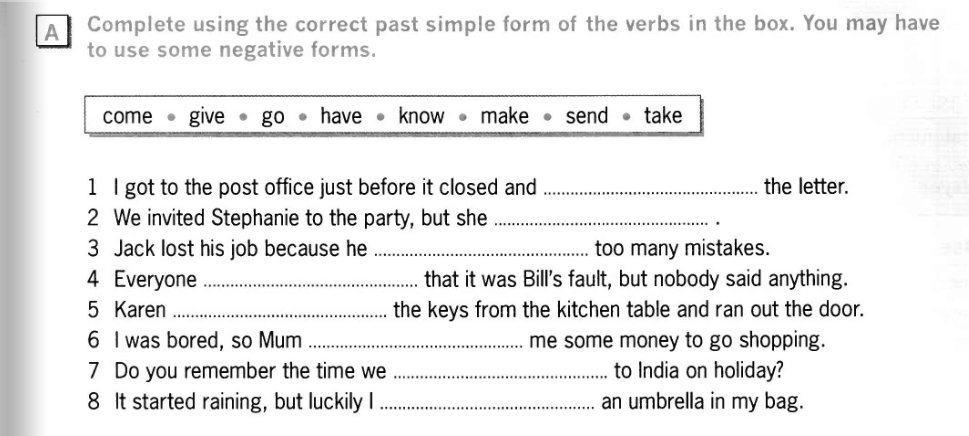
  1. sent
  2. didn’t come
  3. made
  4. knew
  5. took
  6. gave
  7. went
  8. had
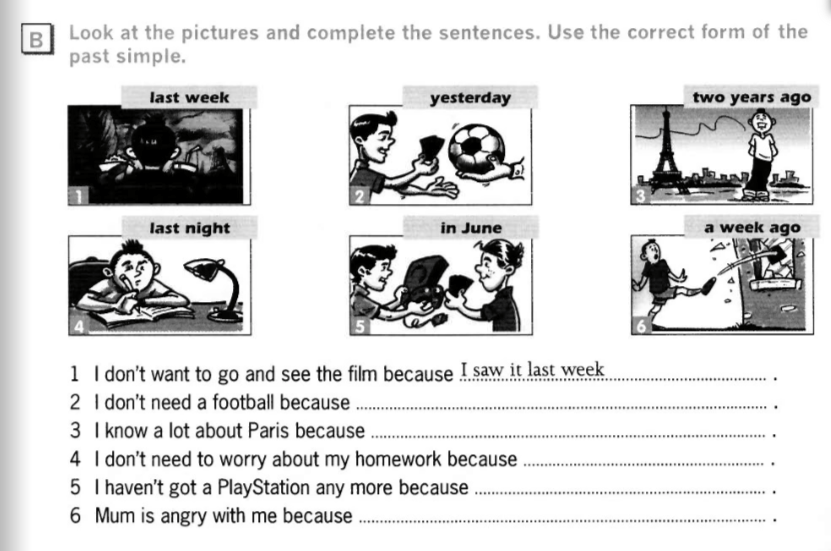
  1. I saw it last week
  2. I bought one yesterday
  3. I went there two years ago
  4. I did it last night
  5. I sold it in June
  6. I broke a window a week ago
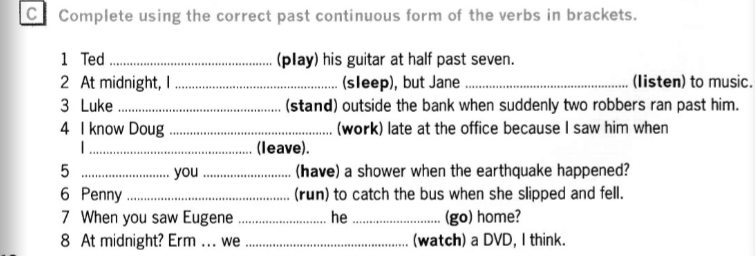
  1. was playing
  2. was sleeping / was listening
  3. was standing
  4. was working / was leaving
  5. Were / having
  6. was running
  7. was / going
  8. were watching
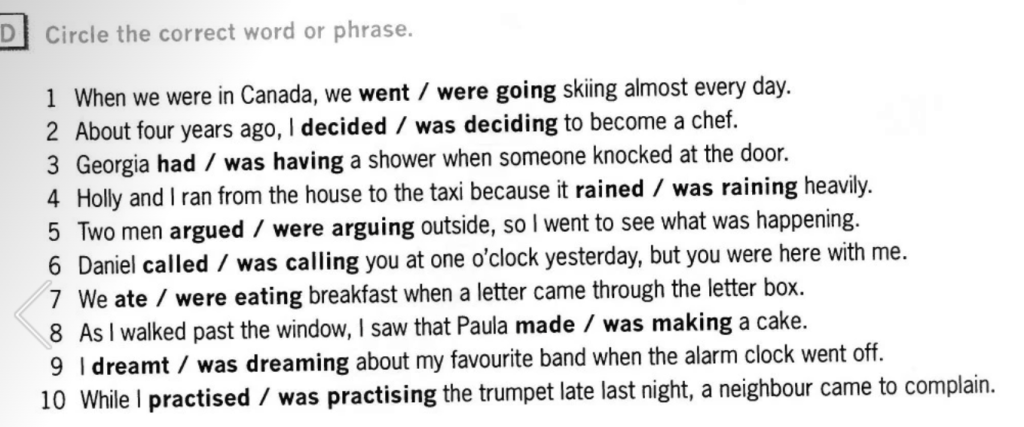
  1. went
  2. decided
  3. was having
  4. was raining
  5. were arguing
  6. called
  7. were eating
  8. was making
  9. was dreaming
  10. was practising

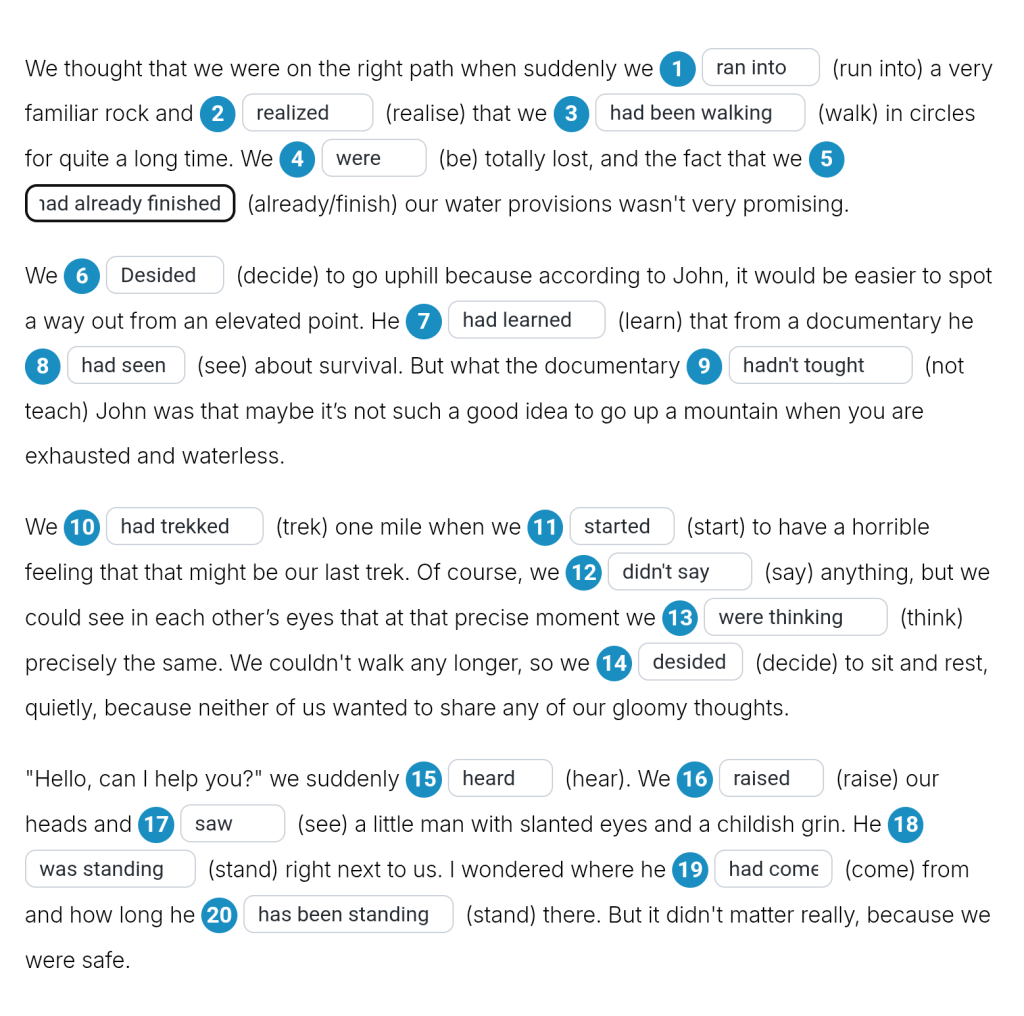
Bad day at traveling

Have you ever had a really bad day at work, collage or when traveling?

Yes, I have. Once, when I was traveling, I had a really bad day. I missed my train because of heavy traffic, and my phone battery died at the same time. I had to look for a hotel without a map, and it was raining heavily. It was very stressful, but luckily, I found a place to stay eventually.

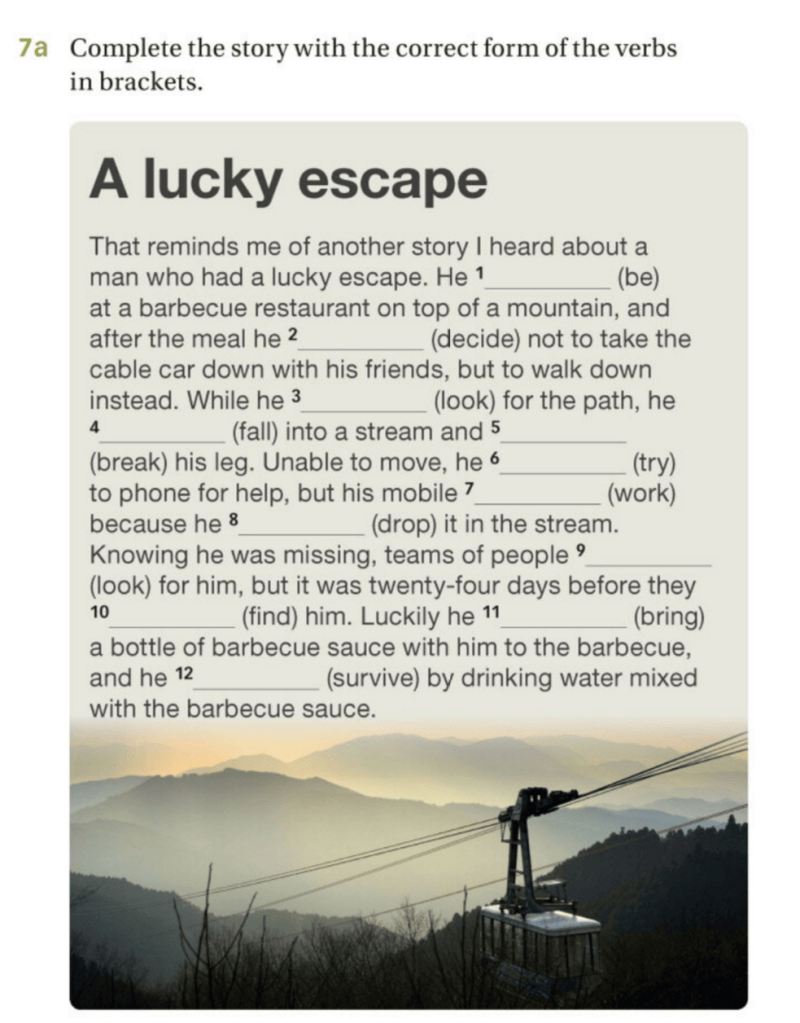
A lucky escape


   1. was
   2. decided
   3. was looking
   4. fell
   5. broke
   6. tried
   7. didn’t work (or wasn’t working)
   8. had dropped
   9. were looking (or looked)
   10. found
   11. had brought
   12. survived

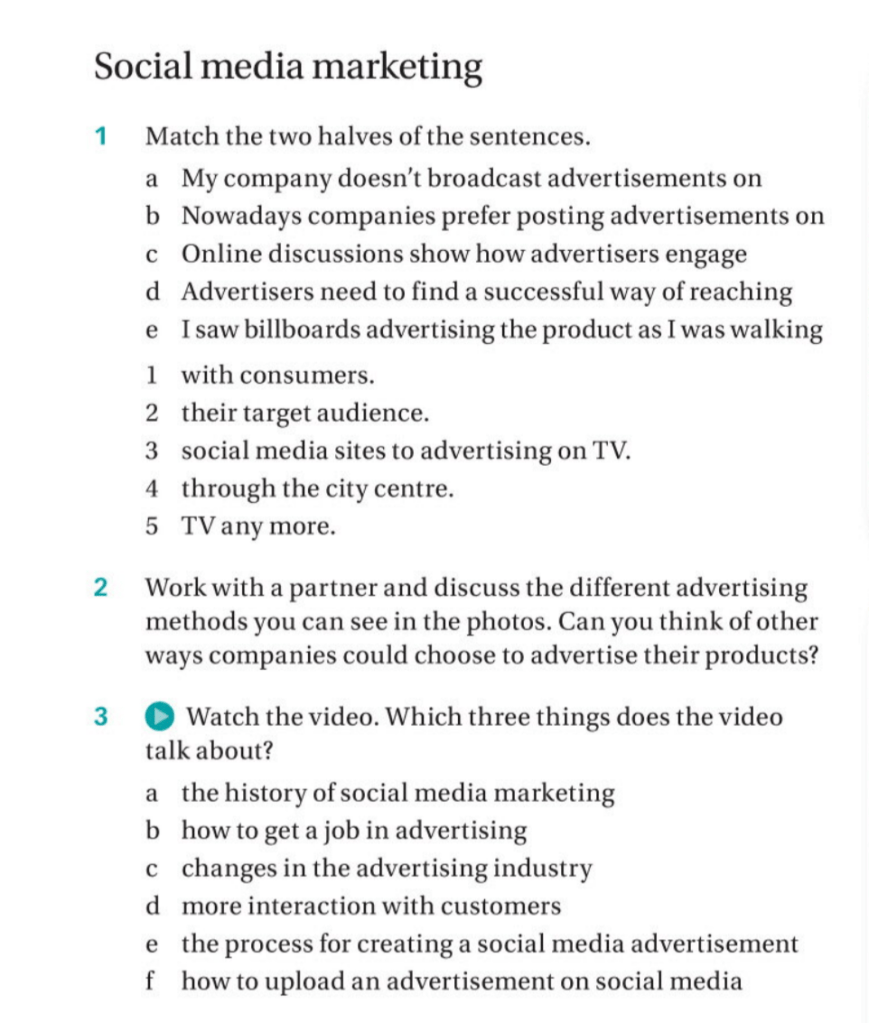
Social media marketing

1.

  • a — 5
  • b — 3
  • c — 1
  • d — 2
  • e — 4

2.

  • Influencer marketing on TikTok and Instagram
  • Search engine ads
  • Email marketing
  • Product placement in movies and video games

3.

  • a
  • c
  • d

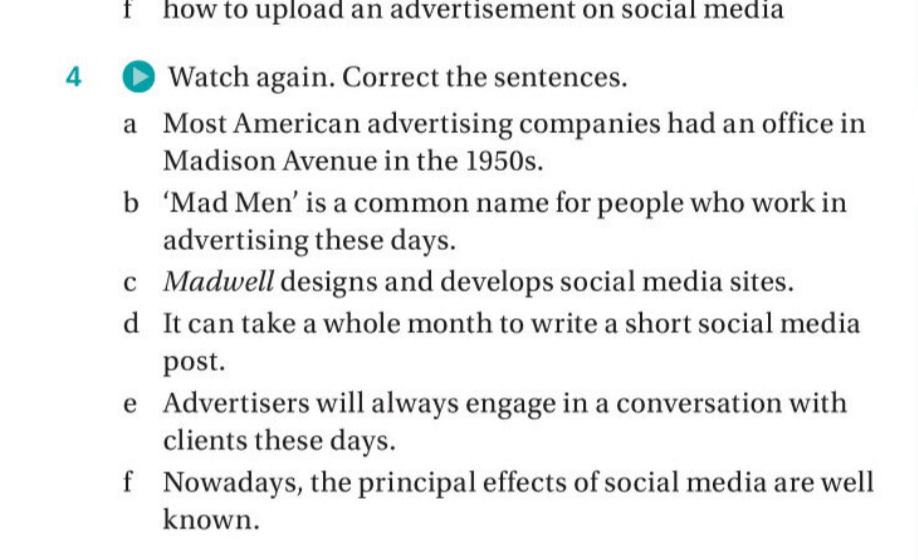
4.

  • a. Most American advertising companies had an office in Madison Avenue in the 1960s.
  • b. ‘Mad Men’ is a common name for people who worked in advertising these days.
  • c. Madwell designs and develops advertising campaigns.
  • d. It can take a few minutes to write a short social media post.
  • e. Advertisers sometimes engage in a conversation with clients these days.
  • f. Nowadays, the principal effects of social media are still unknown.

Assignments for 22.09.26


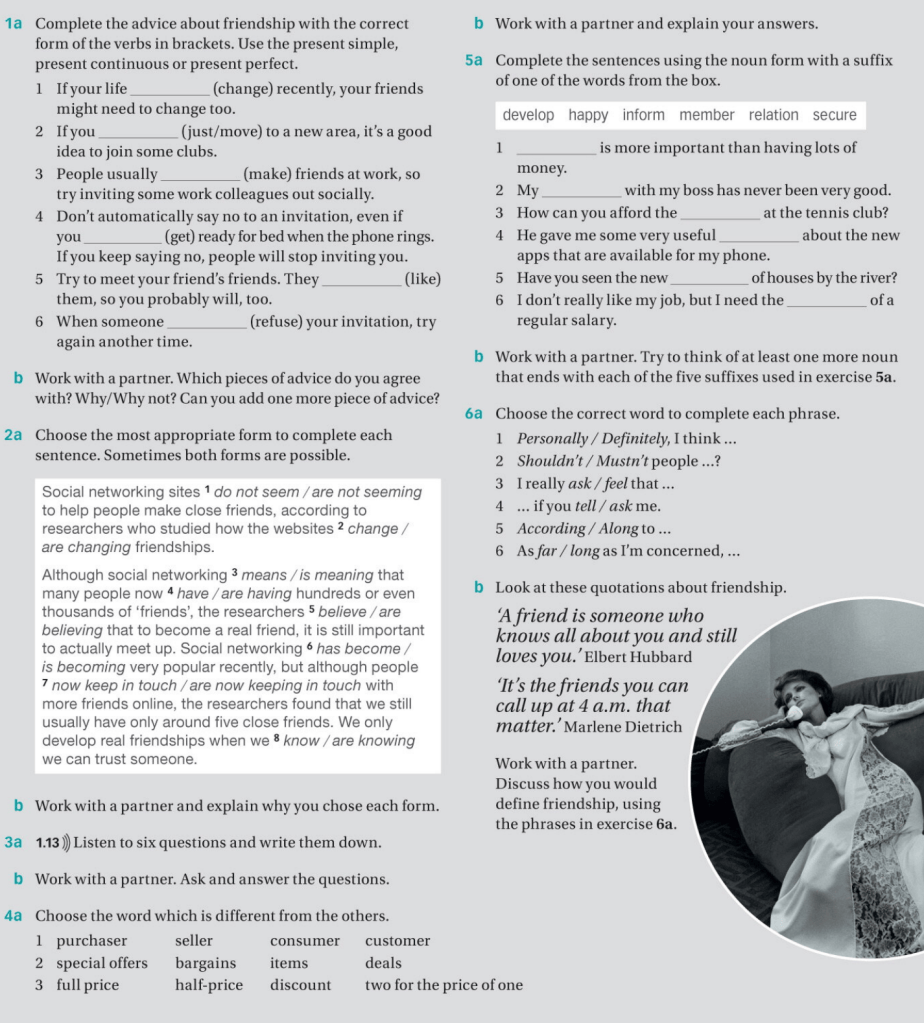
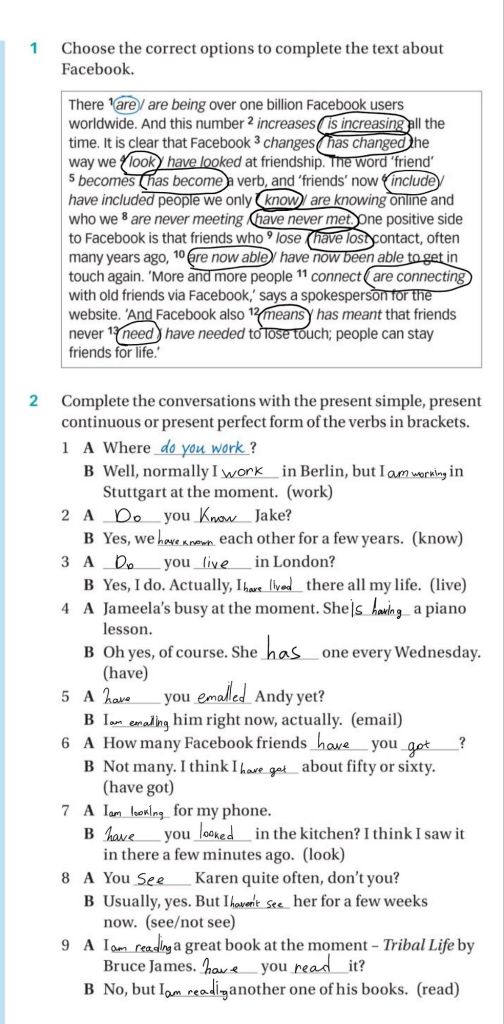
1a   1. has changed
   2. have just moved
   3. make
   4. are getting
   5. like
   6. refuses


2a.  1. do not seem
   2. are changing
   3. means
   4. have
   5. believe
   6. has become
   7. now keep in touch / are now keeping in touch
   8. know


4a   1. seller
   2. items
   3. full price


5a  1. Happiness
   2. relationship
   3. membership
   4. information
   5. development
   6. security

Assignments 17.09.26

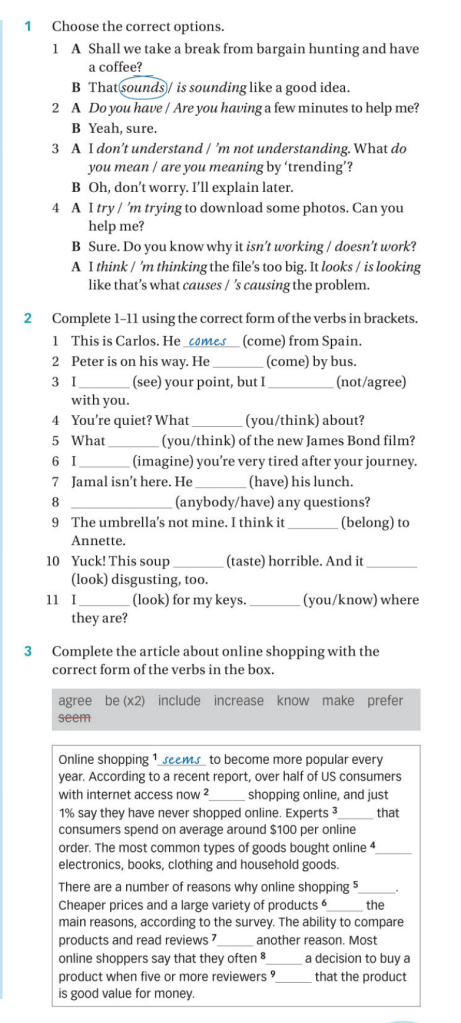
1.

  1. A: Shall we take a break from bargain hunting and have a coffee?
    B: That sounds like a good idea.
  2. A: Do you have a few minutes to help me?
    B: Yeah, sure.
  3. A: I don’t understand. What do you mean by ‘trending’?
    B: Oh, don’t worry. I’ll explain later.
  4. A: I’m trying to download some photos. Can you help me?
    B: Sure. Do you know why it isn’t working?
    A: I think the file’s too big. It looks like that’s what is causing the problem.

2.

  1. This is Carlos. He comes from Spain.
  2. Peter is on his way. He is coming by bus.
  3. I see your point, but I don’t agree with you.
  4. You’re quiet? What are you thinking about?
  5. What do you think of the new James Bond film?
  6. I imagine you’re very tired after your journey.
  7. Jamal isn’t here. He is having his lunch.
  8. Does anybody have any questions?
  9. The umbrella’s not mine. I think it belongs to Annette.
  10. Yuck! This soup tastes horrible. And it looks disgusting, too.
  11. I’m looking for my keys. Do you know where they are?

3.

  1. Online shopping seems to become more popular every year.
  2. According to a recent report, over half of US consumers with internet access now prefer shopping online, and just 1% say they have never shopped online.
  3. Experts know that consumers spend on average around $100 per online order.
  4. The most common types of goods bought online include electronics, books, clothing and household goods.
  5. There are a number of reasons why online shopping is increases.
  6. Cheaper prices and a large variety of products are the main reasons, according to the survey.
  7. The ability to compare products and read reviews is another reason.
  8. Most online shoppers say that they often make a decision to buy a product when five or more reviewers agree that the product is good value for money.
  9. Most online shoppers say that they often make a decision to buy a product when five or more reviewers agree that the product is good value for money.

Assignments for 17.09.26

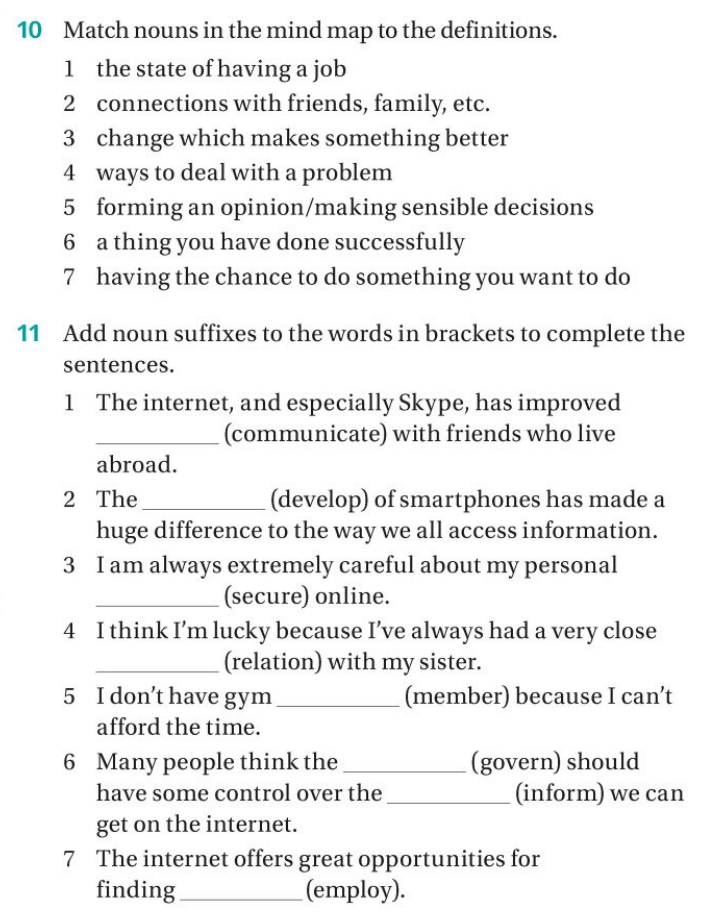
10. employment — the state of having a job

relationships — connections with friends, family, etc.

development — change which makes something better

solutions — ways to deal with a problem

judgement — forming an opinion/making sensible decisions

achievement — a thing you have done successfully

opportunity — having the chance to do something you want to do

11. The internet, and especially Skype, has improved communication with friends who live abroad.

The development of smartphones has made a huge difference to the way we all access information.

I am always extremely careful about my personal security online.

I think I’m lucky because I’ve always had a very close relationship with my sister.

I don’t have gym membership because I can’t afford the time.

Many people think the government should have some control over the information we can get on the internet.

The internet offers great opportunities for finding employment.

Do Social Media Make Us Buy More?

Social media can make us buy more things because we often see products, new trends, and ads. Apps like Instagram, TikTok, and Facebook show us things we may like based on what we search for and watch online. Influencers can also affect what we want to buy.

When we see our favorite influencers using or recommending a product, we may feel that we need it too. Social media can also create a fear of missing out, especially when products are presented as limited or popular. However, social media does not always make us spend money. It can help us compare prices, read reviews, and discover useful products. In my opinion, social media encourages people to buy more by making shopping convenient, attractive, and emotionally appealing, so we should think carefully before making online purchases.

Present Simple, Continuous, Perfect

How do you keep in touch with your friend?

I keep in touch with friends via telegram, phone calls, text messages, sometimes via Snapchat and so on.

Do you think Facebook LinkedIn friends are real friends?

I think you may have friends there, but not close ones. It is possible to make friends on Facebook and then meet in real life

Создайте свой сайт бесплатно на WordPress.com.Создайте свой сайт.
Начать бесплатно